
Open Source Drifting Buoy
As sensors and communications hardware drop in price, there are entire new worlds that are opening up for exploration and monitoring. One of those is the ocean. The Maker Buoy Shop now offers a low cost, solar powered drifting buoy. And it is open source. You can purchase simply the PCB, a maker kit, or an assembled unit.

We first met Wayne Pavalko, the man behind Maker Buoy and the Drifting Buoy Project, at a Maker Faire several years ago. There he showed us one of the first prototypes of the buoy powered by our 3.5 Watt Solar panel.
His first launch lasted 2 years in the field and traveled over 9,000 miles. His latest version is smaller, less expensive and easier to assemble.
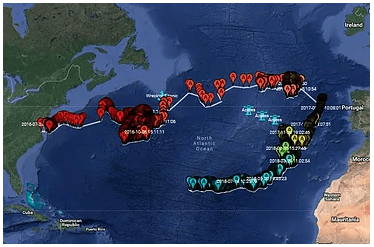
Map of a Maker Buoy Deployment
Purpose of Drifting Buoys
According to NOAA, there are currently over 1,300 drifters in the ocean. Drifting buoys are used to measure ocean currents and sea temperature. The readings are typically sent by a satellite modem to oceanographic researchers. Ocean surface current and temperature readings inform weather and climate models and also help to calibrate satellite based temperature readings.
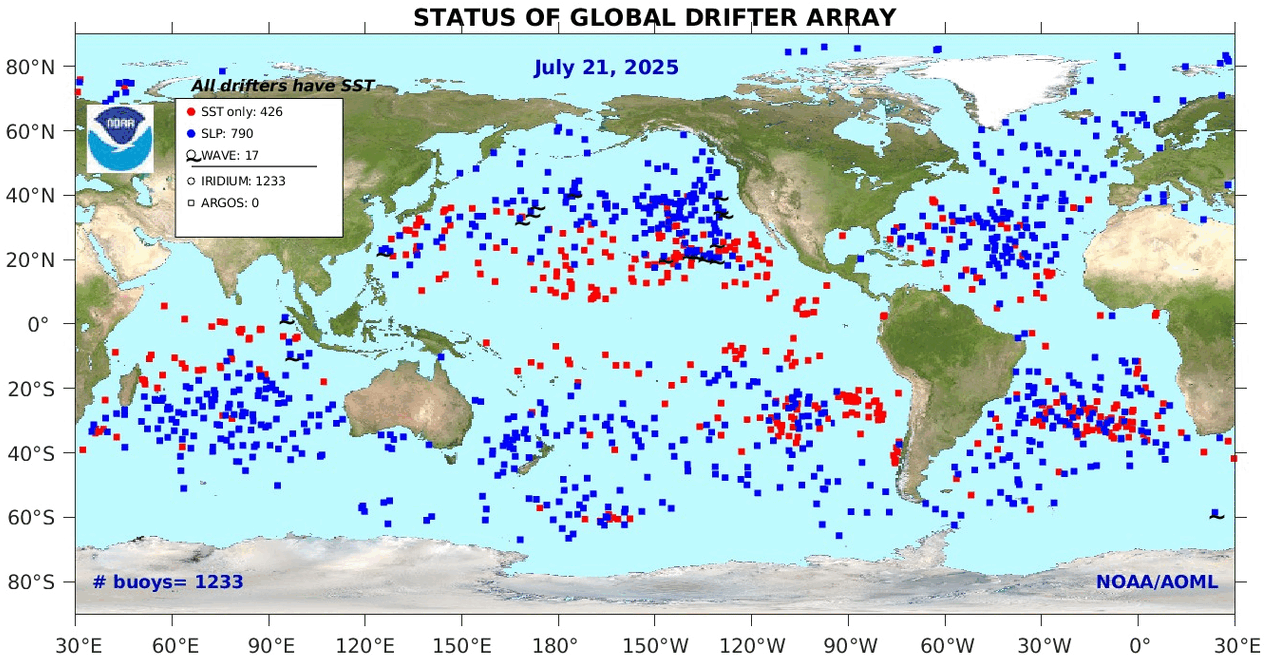
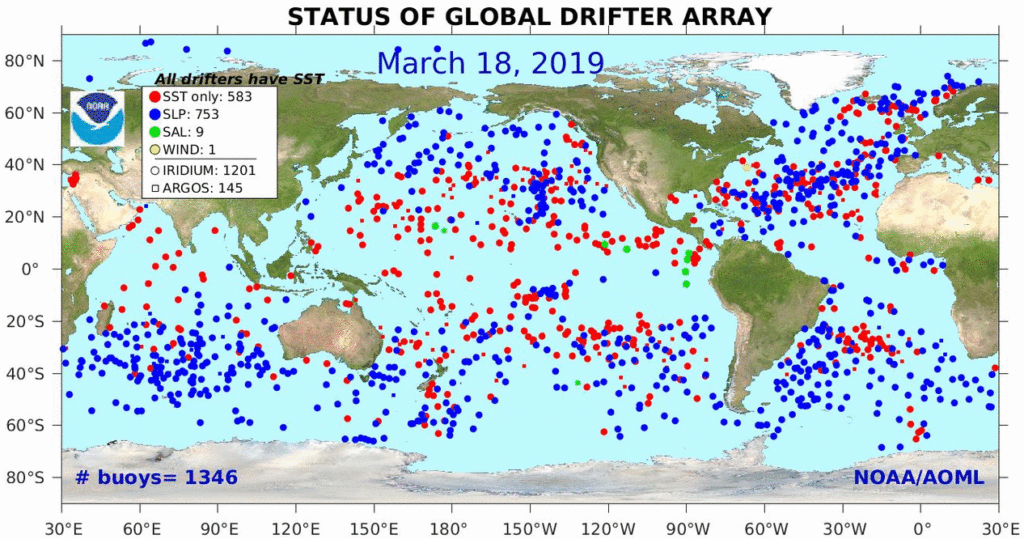
NOAA Map of Drifter Buoy
Drifting Buoy Hardware and Setup
The top of the system has an Iridium SBD Modem, a GPS receiver and a 1 Watt solar panel.
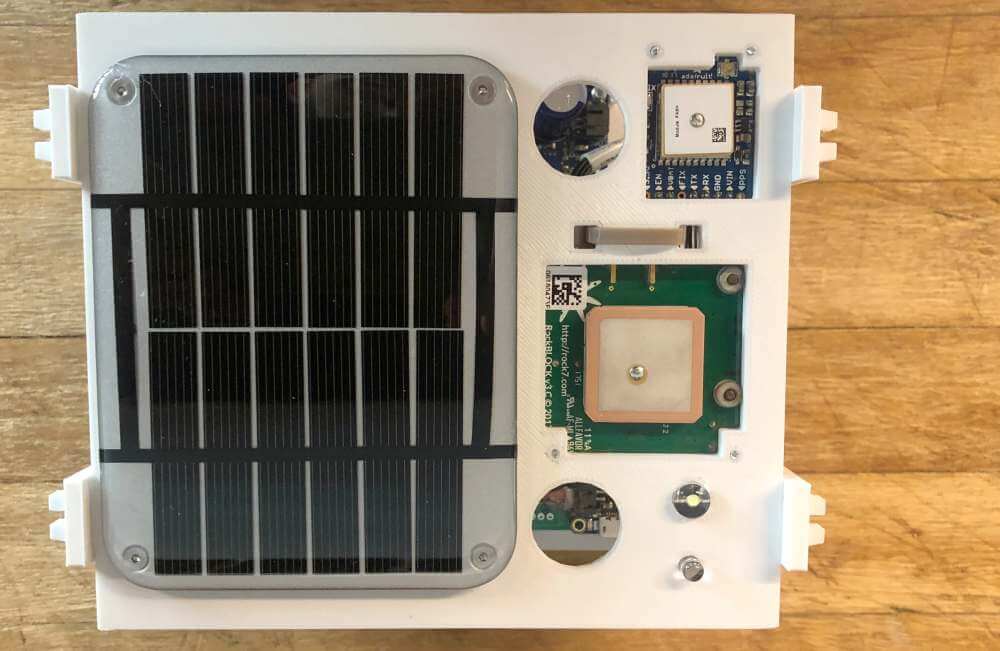
Top View of Maker Buoy
Inside the case is a custom PCB plus an Adafruit feather, a small LiPo battery a connection to a temperature sensor.
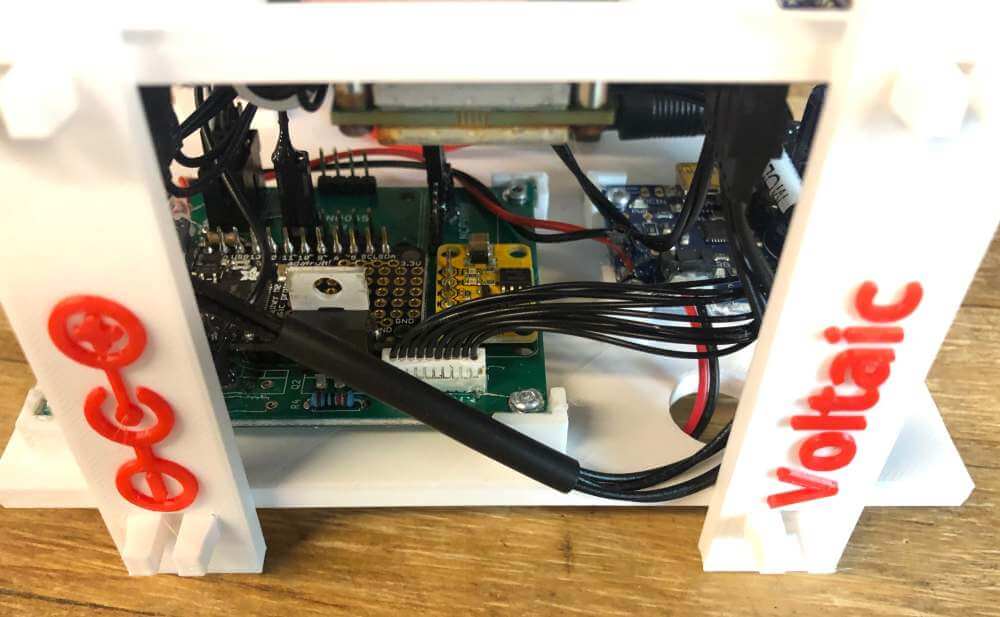
Custom PCB for Maker Buoy
All the components fit neatly in an off the shelf waterproof case. Per instructions, we placed a bead of silicone around the gasket before sealing.
Finally, the PVC pipe attached to the bottom of the case provides ballast.
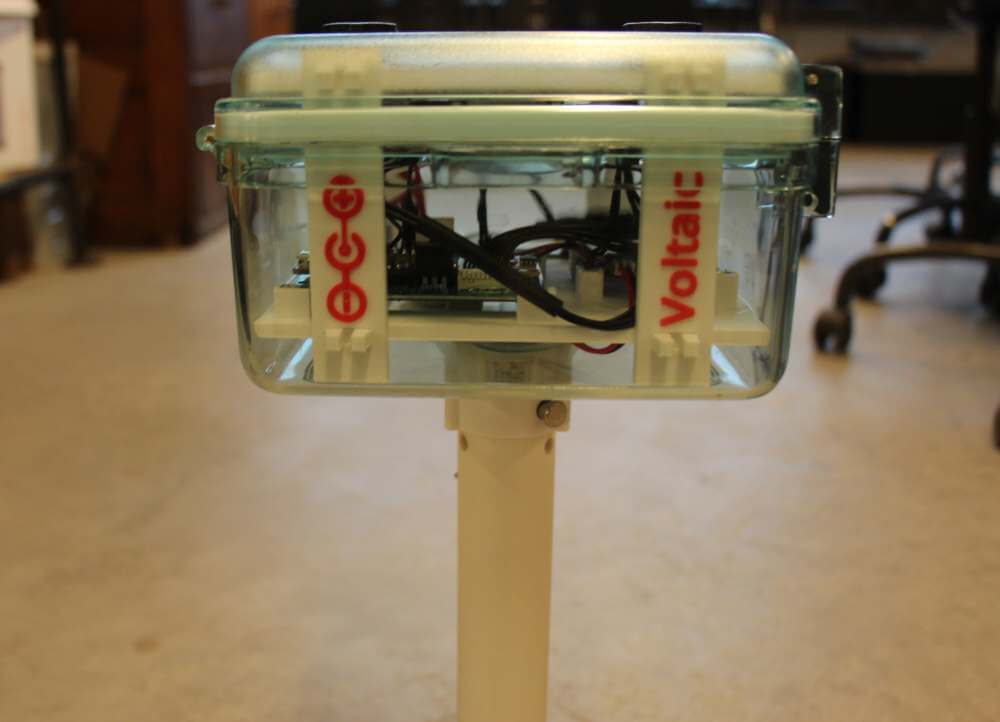
Drifting Buoy Ready for Deployment
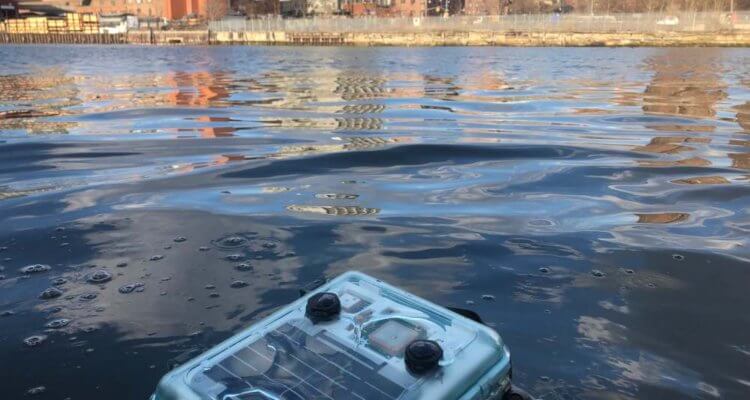
Because we want it back, we tethered the buoy for a two month test in an inlet off the East River. Wayne estimates that each satellite data transmission consumes about 25 mWatt hour of power. With the 1 Watt panel, they consistently make 80 transmissions per day during summer months.
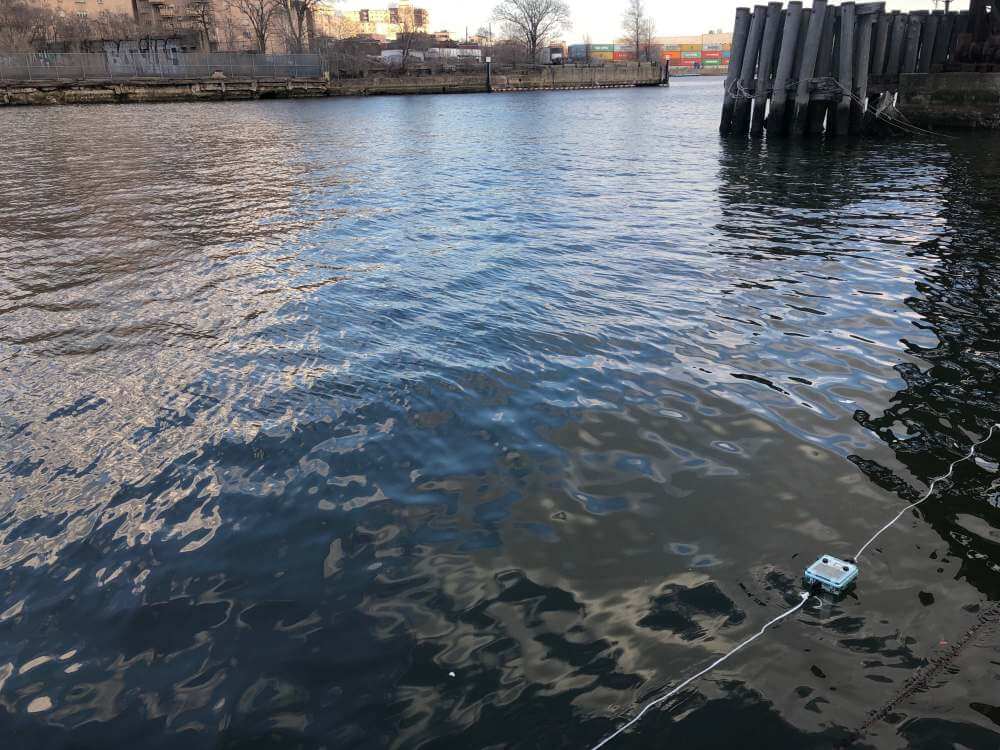
“Drifting” Buoy Tethered in New York
If you are working on an environmental sensing project, we’d love to get to know more.
Schedule an IoT Consultation
Leave a Reply