
We are always excited to learn about new products that equip adventure-seekers in a more sustainable, green way. One of these trends that we’ve seen grow over the past few years is the emergence of rechargeable products to decrease the amount of discarded batteries, and COAST is one of the companies spearheading this movement. They’ve added a line of rechargeable flashlights to their list of quality lights, knives, and multi-tools, and we were very excited to test them out with our solar panels to see if they could be recharged out in the wilderness.
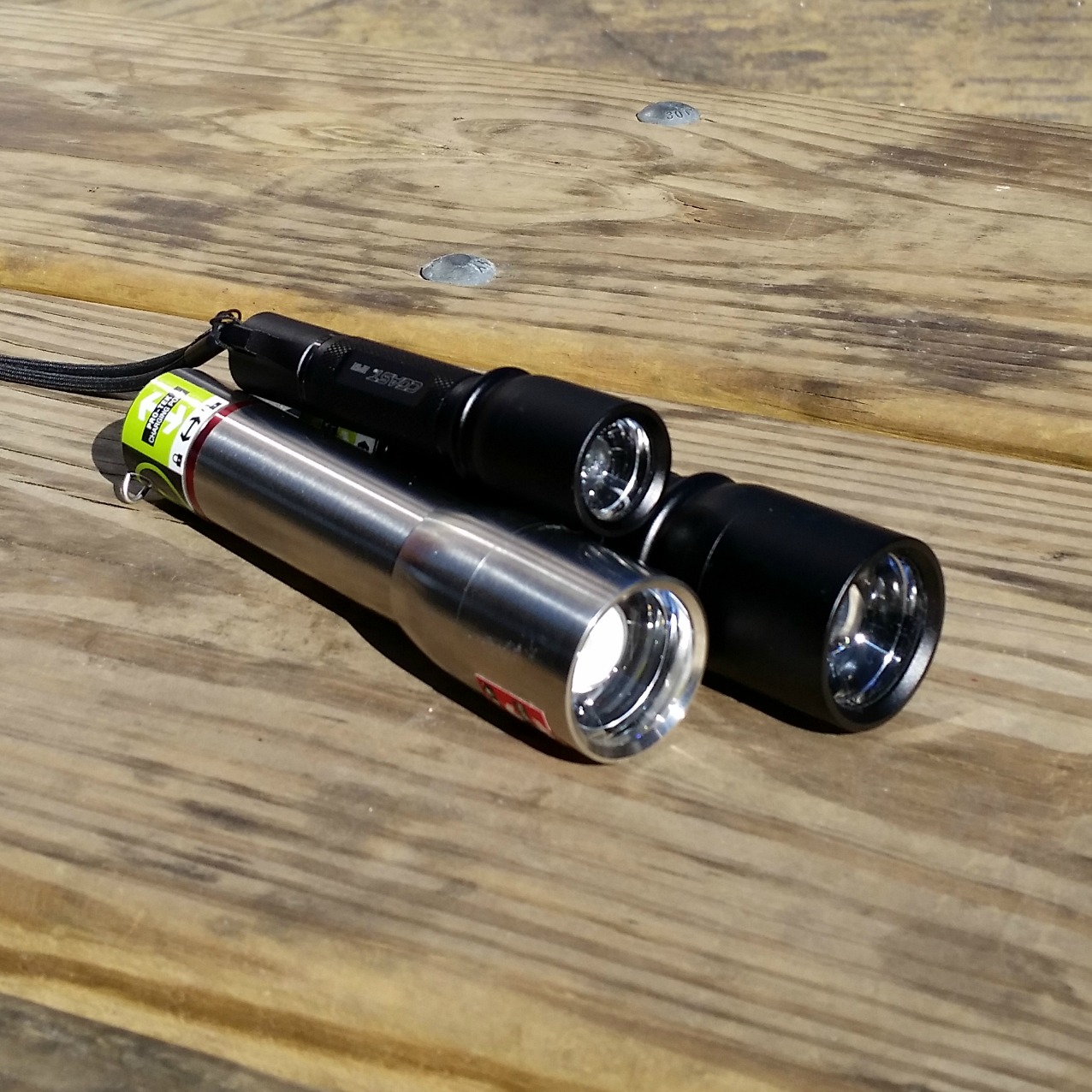

COAST rechargeable flashlights from left to right: HP5R, A22R, HP7R, A25R
After experimenting with multiple panels and flashlights, we identified which of our solar panels are best suited to charge their flashlights. The two flashlights that worked best were the HP5R and the A22R. They are small and lightweight and can easily be charged directly from a 2 Watt Solar Panel without the need of an extra battery in the middle.
Other rechargeable COAST flashlights were also tested and worked great with our V15 and V44 USB batteries. The HP7R and A25R are larger flashlights with larger batteries and longer run-times, and can receive about 4 full charges from a single V44 battery.
| 2 Watt Solar Panel | |||
|---|---|---|---|
| Flashlight | Battery Capacity | Total Charge Time | 1 Hour of Sun = Run Time |
| Coast A22R | 2.4 Wh | 4.5 hours | 45 mins |
| Coast HP5R | 2.4 Wh | 4.5 hours | 45 mins |
Surprisingly, our 2W Solar Panel charged the flashlights at a faster rate than a USB wall charger, given the small capacity of the battery and the low current draw. The panels allowed the battery to charge at a higher voltage than they would normally receive from a USB port, so the charging time was reduced by about 30 minutes.
The COAST flashlights can be recharged by sliding the battery cap upwards without removing it entirely, allowing you to connect with a microUSB adapter while the battery stays inside the flashlight. Alternatively, if you want to charge a spare COAST battery or take the only one you have out of the flashlight for some reason, you can charge the lithium ion battery directly.

