
Hurricane Irene is coming! Here in the NYC area, the crazy rush for last minute supplies has depleted stores of “D” and “C” cell batteries commonly used in portable radios and flashlights. In anticipation of this event, we’ve been charging up our batteries in the sun before the advancing clouds and have found a way to put them to practical use in an emergency situation.
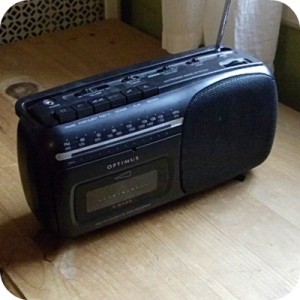
This small portable cassette deck and radio takes 4 “C” cell batteries OR a 6V 400mA DC input. We’re all out of “C” cells, so let’s see what we can do about using our battery to power the thing up. We realize that our 5.5V 600mA output on the V39 battery isn’t quite 6V, but analog systems like radios can be a bit forgiving of this. Digital devices aren’t so forgiving so proceed with caution!
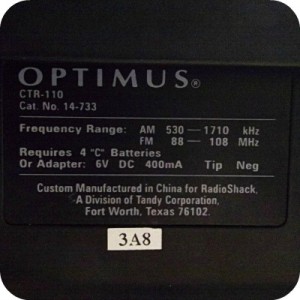
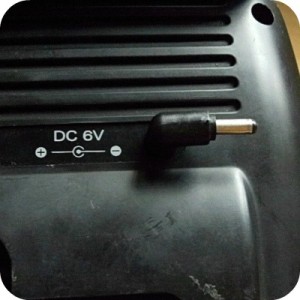
Before hooking up power, we need to see what the device wants. A 5.5mm x 2.5mm plug seems to fit this jack just fine. Notice that the plug is reverse from our standard center positive, collar negative. That means we need to hack a cable together to make the magic happen. We took a 5.5mm x 2.5mm cable and wired it to one of our USB power cables so that the polarities were reversed: white (or black) was connected to red, and visa-versa so that the 5.5mm x 2.5mm connector had a positive collar and negative center to match out radio’s DC input.
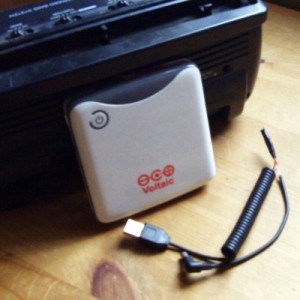
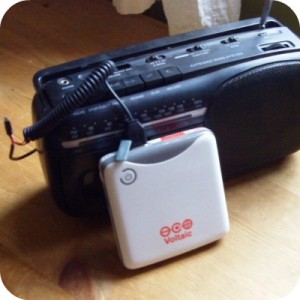
And you’ll have to take our word for it, but it works!
For how long? If the radio is using the maximum rated power, then it is likely to draw about 2.5 Watts (6V * .4A). The V39 is rated for 39 Watt * Hours. So that means we can run our radio for about 15.5 hours (39Wh / 2.5W). For the V11, about 4.5 hours. If we do lose power, we’re ready! Not only will we be able to get news updates, but can jam out to our CCR tapes!
I’ve always been impressed with your system, and how you can power so many devices. Thanks for the tips, and good luck with the hurricane situation.