
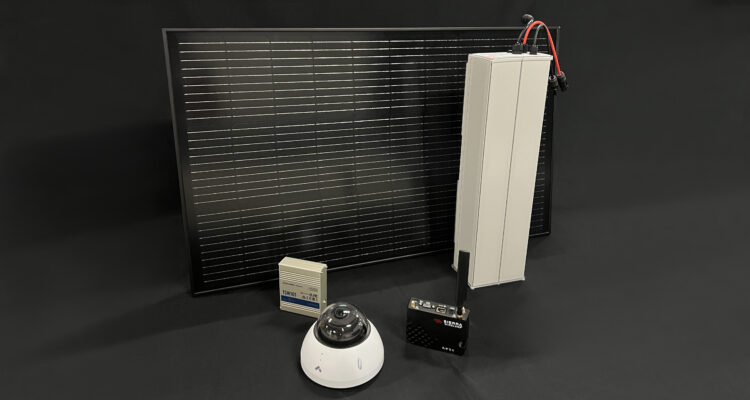
We recently put together a system to solar power a Verkada security camera, Sierra Wireless (Semtech) cellular router and Teltonika PoE Switch on a construction site. We bench tested the actual power consumption of each of the devices on their own and as a system under different scenarios in order to accurately size the solar array and battery storage.
Security System Components
These components were selected for their low power consumption. Lower power draw translates directly to a smaller solar system sizing in the next step. Conversely, choosing higher power components will lead to a larger solar system to maintain the same uptime. Thanks to Rick Miller from Island Tech Services for bringing the pieces together.
The infrared lights on the camera increase system power consumption at night from 8.6 watts to 13.7 watts. We assumed 14 hours of darkness in Atlanta (our deployment location) during December to get to an average of 11.6 watt average power consumption.
- Camera: Verkada CD52E Outdoor Dome
- Cellular Wireless Router: Sierra Wireless Airlink RX55
- PoE Switch: Teltonika 4-port TSW101
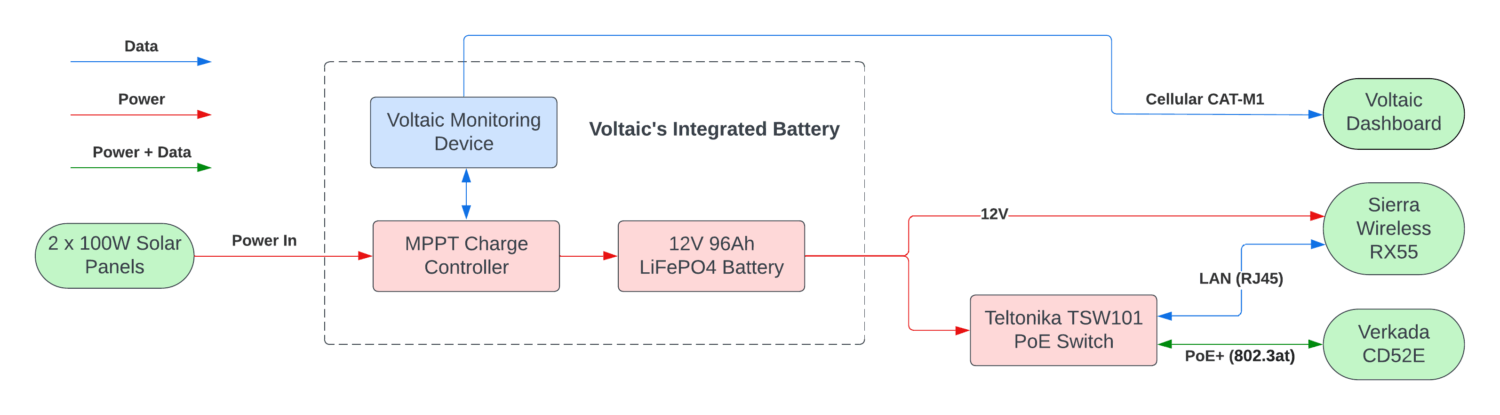
Power Characterization
| Device(s) | Mode | Watts | Measured / Calculated |
|---|---|---|---|
| TSW101 | Idling | 0.9 | Measured |
| CD52E Active | Standard Mode | 5.0 | Calculated |
| CD52E Active | Night Mode | 9.7 | Calculated |
| RX55 | Idle | 1.4 | Measured |
| RX55 Streaming | Standard Mode | 2.7 | Calculated |
| RX55 Streaming | Night Mode | 3.1 | Calculated |
| TSW101 + RX55 + CD52E | Standard Mode | 8.6 | Measured |
| TSW101 + RX55 + CD52E | Night Mode | 13.7 | Measured |
| TSW101 + RX55 + CD52E | Average | 11.6 | Calculated |
We ran the tests in our office and monitored the video livestream and motion event recognition using Verkada’s very easy to use portal.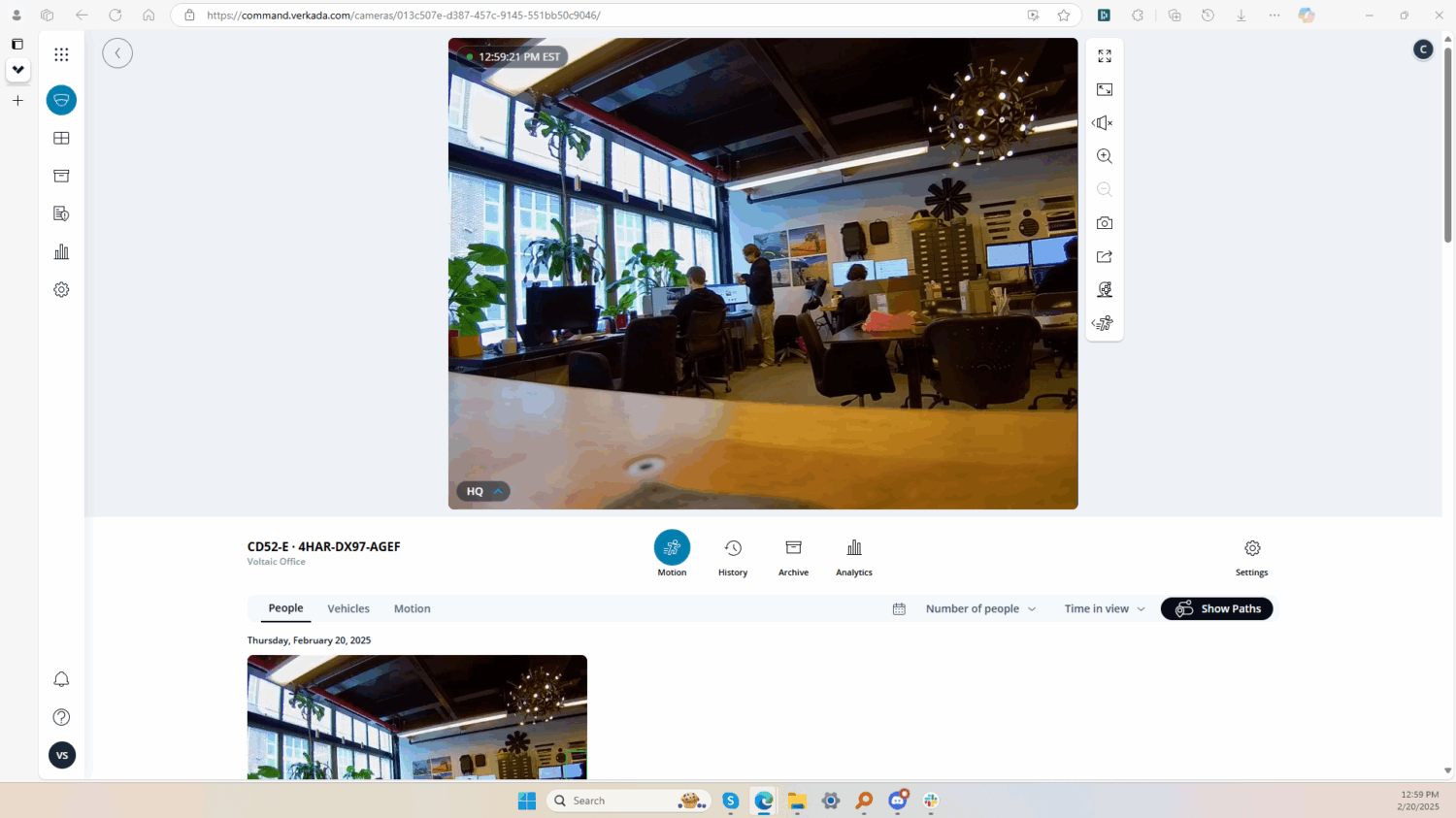
Solar System Sizing
For this system to run continuously, we need the solar panel to be capable of producing at least 1.5X the average power consumption per day.
The least amount of solar energy falls on Atlanta in December. During this month, a south facing solar panel will receive the equivalent of 2.6 hours of “full” sunlight a day.
We’re consuming 11.6 watts * 24h or 278 watt hours per day. The panel should therefore be able to produce 420 watt hours per day. For Voltaic, that translates to our 200 Watt CORE System. The 200 watt panel can produce 520 watt hours per day (2.6 x 200) and the 96Ah battery is capable of running the system for about 4 days with no sun.
You can use our offgrid solar sizing tool to help pick out the best solar system for your application.
Leave a Reply