
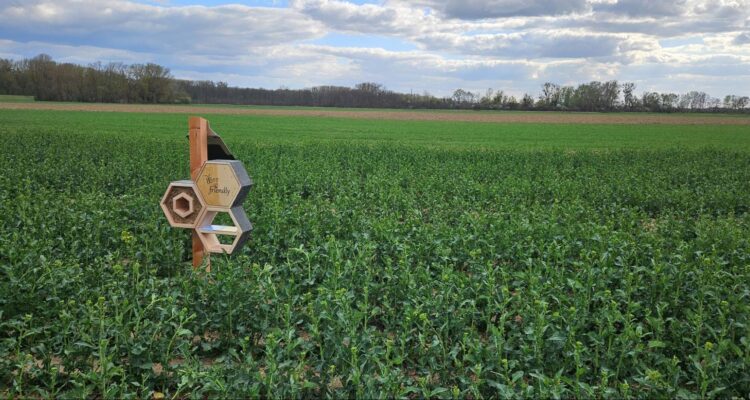
Bee Friendly’s Insector is a solar-powered, cost-effective, site-specific data collection and AI processing system that tracks biodiversity and ecosystem health. It analyzes data essential for compliance with the Corporate Sustainability Reporting Directive (CSRD), the EU regulation designed to enhance and standardize corporate sustainability reporting.
The Insector, which is built on Make87‘s platform and uses AI-based detection and classification of insects as bioindicators, provides detailed data on ecological health, generates structured reports, and offers practical recommendations for sustainable measures beyond compliance. While it gives companies a strategic way to fulfill their environmental responsibility, it also helps them build their ecological resilience.
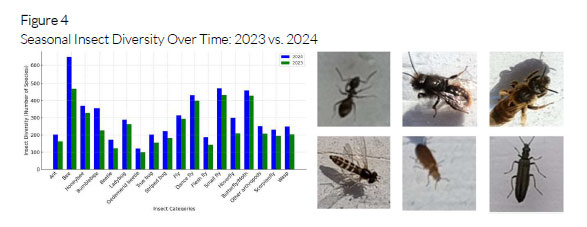
In the required public CSRD report, a company must disclose its environmental, social, and governance (ESG) efforts, including how its business activities impact the environment. Companies must show how their activities impact individual species and ecosystems and present a biodiversity strategy outlining how they will rectify their negative impact on the environment by 2030 and produce a positive impact by 2050.
Companies need site-specific data to prepare the European Sustainability Reporting Standards (ESRS) E4 report.
- How many endangered species are at the site?
- How many invasive species are at the site?
- How many pollinators are at the site?
- How many beneficial insects are at the site?
- How many pests are at the site?
- Are ecosystem services still being fulfilled?
- What is the condition of the surrounding ecosystem?
Collecting this information to comply with the regulations has relied on external auditors and has been time-consuming, expensive, weather-sensitive, and inconsistent. In truth, the complexities of biodiversity are challenging to quantify. However, targeting bioindicators can help address these challenges. Because many insect species can act as bioindicators, their presence or absence provides essential data about the area’s ecosystem.
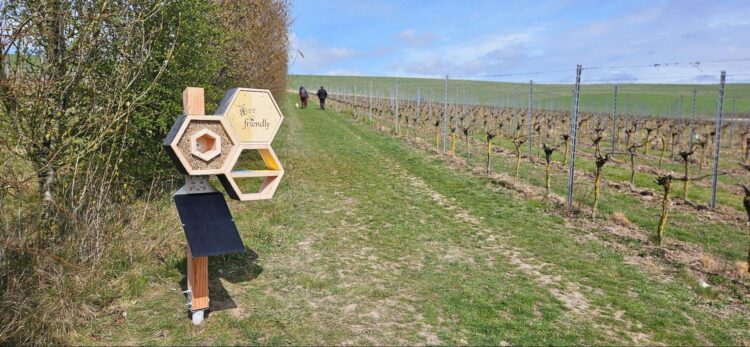
This is where the Insector comes in. The Insector is a plug-and-play camera-based biodiversity IoT monitoring system using deep learning algorithms to detect and classify insects reliably. Each self-sufficient Insector is powered by a Voltaic Systems’ P120, 20-watt 6-volt solar panel, to collect and process data reliably from March to October. The P120 creates a robust and reliable power solution that is resilient against environmental factors like rain, wind, and UV radiation.
According to the Bee Friendly White Paper, “Insects are attracted by the material and color of the approach plate, which the camera is directed at. Once an insect lands on the approach plate, it receives a unique tracking ID via YOLO Object Detection. While the insect remains on the approach plate, photos are taken, sent to our servers, and classified via EfficientNet.”
The Insector interprets trends and population fluctuations of insects, making a company’s conservation efforts measurable. If a company’s efforts are not working, corrective measures can be implemented, such as optimizing the selection of plant species or adjusting maintenance intervals.
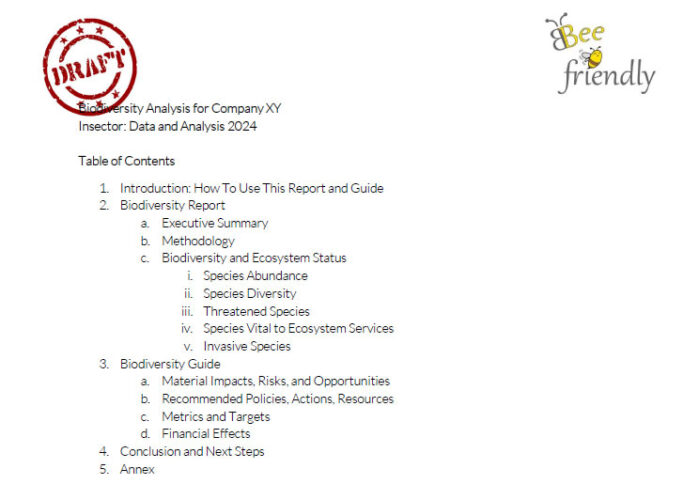
The Insector provides key figures, metrics, recommendations for the sustainability report, and other materials like Insector fact sheets or text modules for press and public relations.
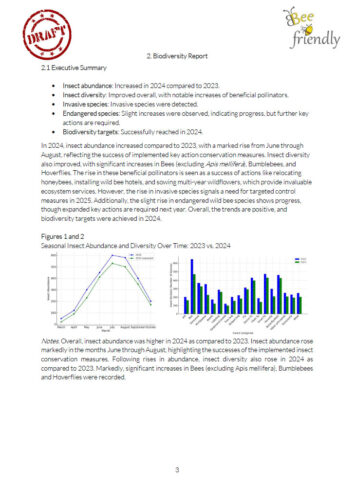
Unlike external auditors, installing solar-powered Insector is a cost-effective and reliable data-driven solution that transforms corporate sustainability reporting from a regulatory challenge into an opportunity to promote nature conservation.
Visit the Bee Friendly website to find out more about the Insector.
Brilliant!