
Voltaic Systems presented recently at the Things Conference Embedded 2022. The Things Network launched the Generic Node at the conference and Voltaic used the opportunity to focus on the design process for a solar powered, low consumption device. We show the calculations and thinking behind a product we’re developing which uses a 0.3 Watt mini solar panel paired with a Lithium Ion Capacitor to provide continuous power to a node.
The full presentation is below:
Why Solar for LoRa Devices?
Anyone who works with LoRa nodes knows that they can be incredibly power efficient. In many cases, primary batteries can be used to run a node for 1 – 10 years depending on the capacity of the cells and the actual device power consumption.
Switching to solar can make sense if you are looking to reduce the waste, physical cost and labor cost of replacing those primary cells.
For example, if you’re consuming 200μA on average with four AA batteries (~6Wh per year) , that’s going to last about 2 years. At that point, you will have go to the deployment site, remove the device and swap out the batteries. Solar + storage can mean that you can deploy and forget.
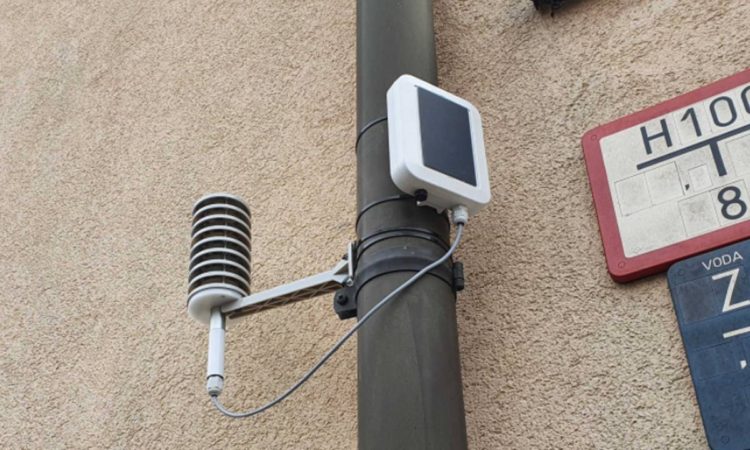
Sensedge has deployed these air quality sensors powered by Voltaic’s 1 Watt panel (P124) plus hybrid capacitors.
Why Lithium Ion Capacitors for Storage
In the presentation, we talk through these steps in designing a solar powered device, including:
- Measure daily power consumption
- Estimate power production at device location(s)
- Select storage chemistry and capacity
- Build an efficient enough circuit to match targeted lifetime
- Test and qualify extensively
In particular, we propose using a Lithium Ion Capacitor (LIC) as the storage device for very low powered devices which we are considering as 350μA at 3.3V average power consumption. Although LICs cost more per Watt hour and are less energy dense than Lithium Ion batteries, they have a much broader temperature range, will perform for far more cycles and don’t have any of the safety issues. This means that the system will stay running longer, especially in extreme conditions. We also have a lot less to worry about when it comes to shipping the system.
Lithium Ion Battery vs Lithium Ion Capacitor
| Lithium Ion Battery | Lithium Ion Capacitor | |
| Operating Temperature | 0-45C (charge), -20-60C (discharge) | -40-70C |
| Price ($/Watt Hour) | <$0.2 | ~$8 |
| Charge Cycles | 500-1,000 | 100k |
| Safety Circuit Required | Yes | Minimal |
| Dangerous Goods (Shipping) | Yes | No |
| Energy Density (Wh/kg) | 250 | 30-50 |
We look forward to sharing the new solar for LoRa nodes charge circuit with you soon.
Leave a Reply